OMTech Laser Workshop

Find the Right OMTech Laser for Your Workshop

From CO2 engravers and fiber markers to handheld welders, we help makers, small businesses, and manufacturers choose the right laser tool. Over 50,000 machines delivered to 50+ countries since 2013.

ISO 9001 Certified CE & FDA Registered 2-Year Warranty
50,000+
Machines Delivered
50+
Countries Served
13+
Years in Business
30,000+
Happy Customers

OMTech Laser Machines for Every Application

Whether you're engraving wood, marking metal, or welding sheet steel, we have a laser system designed for your specific needs and budget.

Why Makers and Businesses Choose OMTech Laser

We don't just sell laser machines. We help you pick the right one, learn how to use it, and support you long after the purchase.

Versatile Processing

Process 20+ material types across CO2 (10.6µm, Reci tubes), fiber (1064nm, Raycus/JPT sources), and handheld welding platforms. Wood, acrylic, leather, metals, glass, stone, rubber, and composites are all covered within the product line.

20+ Material Types
User-Friendly Design

Our machines are built for real people, not just engineers. Intuitive software, clear documentation, and helpful video tutorials get you cutting in hours.

4-Hour Basic Training
Complete After-Sales Support

Free setup guidance, training resources, and a responsive US-based support team. We're here for you from unboxing to your thousandth project.

2-Year Warranty

What Can You Make with an OMTech Laser?

Our customers use OMTech lasers in workshops, studios, factories, and garages. Here are some of the most popular applications.

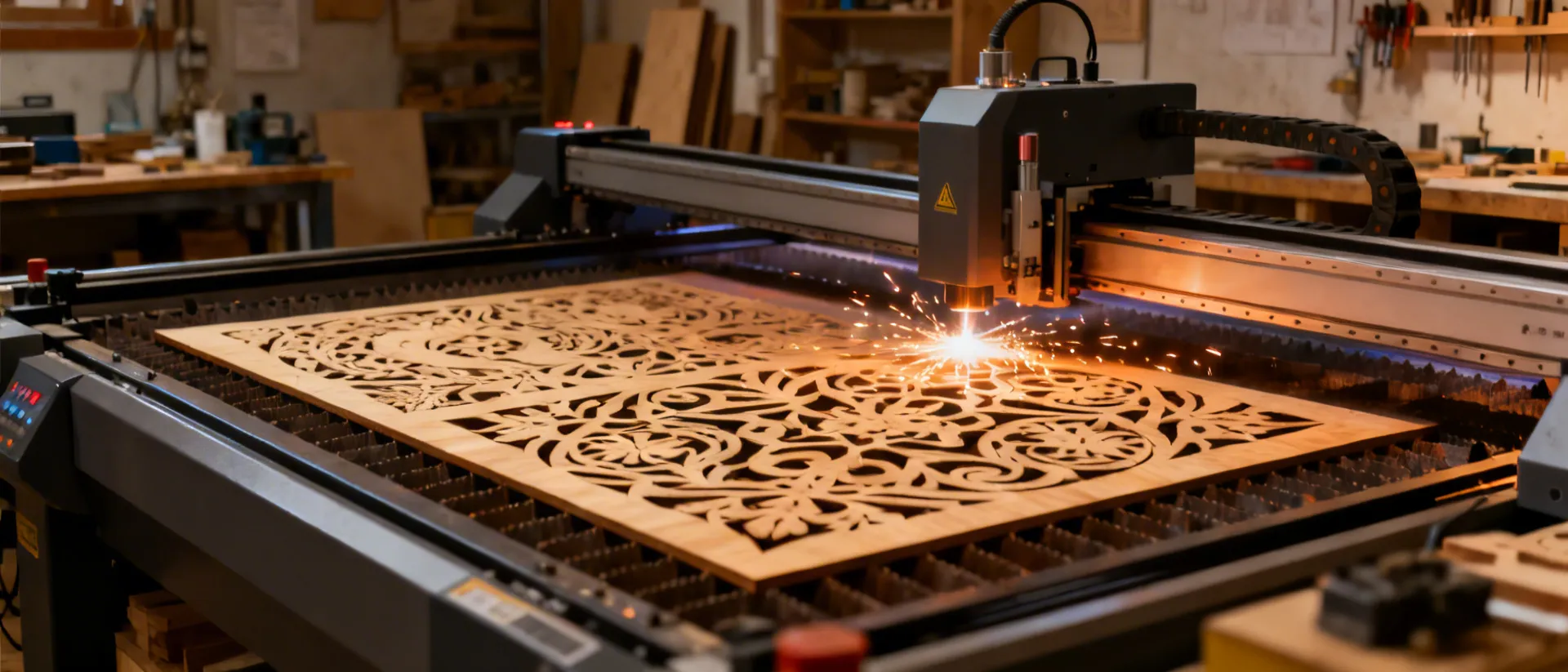
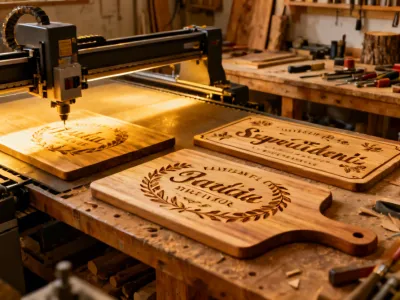
Wood Engraving & Cutting

Signs, ornaments, furniture details, architectural models, and custom gifts.

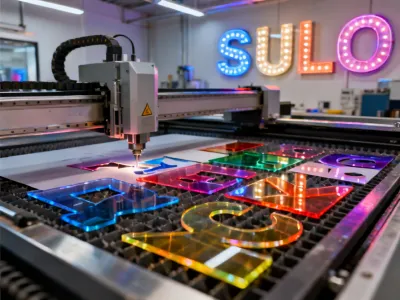
Acrylic & Plastic Cutting

Signage, LED displays, jewelry, enclosures, and prototyping components.

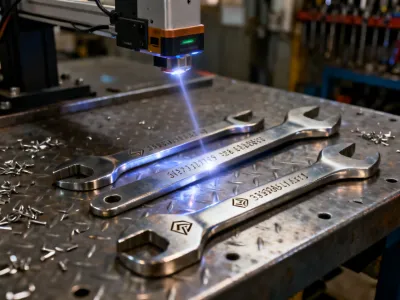
Metal Marking & Engraving

Serial numbers, barcodes, logos, and deep engraving on steel, aluminum, and titanium.

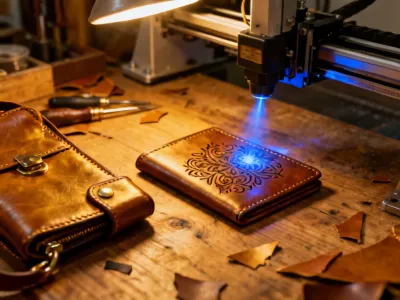
Leather & Fabric Processing

Custom wallets, belts, patches, apparel details, and textile prototyping.

Getting Started Is Easier Than You Think

From choosing the right machine to your first project, we guide you every step of the way.

1
Tell Us Your Needs

Share your materials, budget, and workspace dimensions. Our applications team will narrow your options to 1-2 specific models and power levels based on your production requirements.

2
Receive & Set Up

Your machine ships with everything included. Follow our step-by-step setup videos and guides, or reach out to our support team for live assistance.

3
Start Creating

Use compatible software like LightBurn or EZCad to design, then let the laser do the work. Our knowledge base has hundreds of material settings and project ideas.

What Our Customers Say

Real feedback from real OMTech users around the world.

"I purchased our OMTech 60W CO2 laser in March 2022 to launch our custom gift line on Etsy. Within the first week, I had dialed in settings for birch plywood at 15mm/s and 55% power. We processed over 800 personalized cutting boards in our first holiday season, averaging 12 minutes per unit. The Ruida controller paired with LightBurn made batch production straightforward."

Sarah Mitchell Owner, Lone Star Laser Crafts, Austin, TX

"We integrated the OMTech 30W JPT fiber laser into our QC line in January 2023. It marks UDI-compliant barcodes on 316L stainless surgical instrument handles at 2,800mm/s. We tested readability with a Cognex DataMan 370 scanner across 500 samples and hit 99.8% first-pass read rate. Cycle time dropped from 45 seconds with dot peen to 3 seconds per part."

David Kowalski Quality Manager, Precision CNC Works Inc., Columbus, OH

"We switched from TIG to the OMTech 1500W handheld laser welder in June 2024 for our commercial kitchen fabrication line. On 1.2mm 304 stainless, the heat-affected zone dropped from 4mm to under 0.5mm, eliminating post-weld grinding on visible seams. Our operators completed training in 4 hours. Throughput on sink basin assemblies increased roughly 40%, though we still use TIG for joints over 3mm thick where deeper penetration is needed."

Robert Jennings Shop Foreman, Pacific Coast Metal Fab LLC, Anaheim, CA

Frequently Asked Questions

New to laser engraving? We've answered the most common questions to help you decide.

Ask Us Anything

CO2 lasers (10.6µm wavelength, using Reci glass tubes) excel at cutting and engraving organic materials: wood, acrylic, leather, fabric, glass, and rubber. They cannot directly mark bare metals because the 10.6µm wavelength reflects off metallic surfaces. Fiber lasers (1064nm wavelength, using Raycus or JPT sources) are absorbed by metals, making them suited for marking, engraving, and color-coding stainless steel, aluminum, titanium, and brass, but they cannot cut or engrave wood, leather, or most plastics effectively. This is a physics-level limitation, not a quality issue. Neither type is universally superior: your material mix determines the right choice. If you process both organic materials and metals, some shops run one of each.

For CO2 lasers: 40W handles thin wood and acrylic engraving. 60W is the sweet spot for most small businesses doing cutting and engraving. 80-100W handles thicker materials and faster production. 130-150W is for production environments cutting thick acrylic or plywood consistently. For fiber lasers: 20W is sufficient for surface marking. 30-50W handles deeper engraving and color marking on stainless steel. 60-100W MOPA lasers are for demanding deep-engraving and annealing applications.

Our CO2 lasers with Ruida controllers are compatible with LightBurn (recommended, paid software) and RDWorks (free, included). Our fiber lasers use EZCad2 or EZCad3 software (included). Both platforms support common design files including SVG, AI, DXF, BMP, JPG, and PNG. Many users design in software like Adobe Illustrator, CorelDRAW, or Inkscape and then import into the laser control software.

Yes. All OMTech laser machines come with a standard 2-year warranty covering the machine frame, electronics, and mechanical components. The laser tube (for CO2 models) carries a separate warranty period. We also maintain a large inventory of replacement parts in our US warehouse for fast shipping. Our technical support team is available by email, phone, and live chat during business hours.

OMTech lasers are Class 1 laser products when the enclosure is closed, meaning the laser beam is fully contained. Laser cutting and engraving produces fumes and particulates that must be properly exhausted. You will need either a direct exhaust duct to the outside (minimum 4" diameter, 200+ CFM fan) or an activated-carbon inline filtration unit. PVC and vinyl must never be processed because they release hydrochloric acid gas, which is toxic and corrodes machine components. Polycarbonate also produces harmful fumes. Always follow the safety guidelines in your user manual and wear OD5+ laser safety glasses rated for your machine's wavelength when the enclosure is open.

Several materials are unsafe or impractical for laser processing. PVC and vinyl release chlorine gas when lasered, which is toxic and will damage your machine's optics and rails. Polycarbonate absorbs IR radiation and discolors rather than cutting cleanly, while producing harmful fumes. ABS tends to melt rather than cut, producing cyanide compounds. Fiberglass and carbon fiber composites produce hazardous dust. On the capability side, CO2 lasers cannot cut metals (they lack the energy density), and fiber lasers cannot cut wood or acrylic (the 1064nm wavelength passes through or scorches organic materials unevenly). Highly reflective metals like polished copper and gold can reflect the fiber laser beam back into the optics, potentially causing damage, so they require careful parameter tuning or surface treatment before processing.

This is one of the most debated questions in the laser community. OMTech machines are designed in the US and manufactured in China, which is how we offer competitive pricing while maintaining quality control. Western brands like Epilog and Trotec (manufactured in the US and Austria, respectively) typically cost 3-5x more and offer tighter build tolerances, proprietary software ecosystems, and local service networks. The tradeoff is real: a Trotec Speedy 360 starts around $30,000 while a comparable OMTech 60W CO2 starts under $2,000. For hobbyists, small businesses, and many production environments, OMTech machines deliver the performance needed at a fraction of the cost. For medical device or aerospace applications requiring full traceability and factory-calibrated repeatability, premium brands may be warranted. We encourage buyers to evaluate based on their specific production requirements, tolerance needs, and total cost of ownership rather than country of origin alone.

Not Sure Which Laser Is Right for You?

Tell us what materials you work with and what you want to create. Our applications team will recommend a specific OMTech model, power level, and accessory package matched to your workflow. Free material testing is available for qualified inquiries.